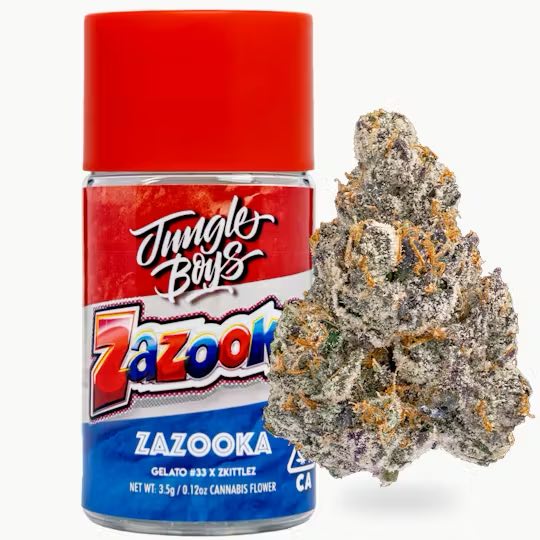
Some brands earn their reputation through marketing. Jungle Boys earned theirs by being the brand connoisseurs reach for when nothing else will do. Started in Los Angeles in the 2010s, they were one of the first operations to apply the precision-cultivation playbook — small-batch indoor, hand-trimmed, slow-cured — at a scale that made premium genetics commercially available outside of cup-winning circles.
In 2026, that reputation still holds. Here's why their cuts cost more, and why the math still works for serious smokers.
The Story (Short Version)
Jungle Boys (sometimes written JBC for Jungle Boys Cannabis) started as a small LA grow that built its name on terp-forward exotic strains and an obsession with cure quality. They've expanded operations significantly since the legalization wave hit California, but the core philosophy — small batch, slow cure, premium genetics — hasn't changed.
When you see Jungle Boys on a real distro's top-shelf, you're not paying for the logo. You're paying for the consistency of the cure and the depth of the terpene profile that most "premium" brands can't replicate.
What Sets Their Genetics Apart
The Jungle Boys phenotypes are bred specifically for terpene density, not just THC numbers. The result is that their strains often test in the mid-to-high 20s for THC but with terp totals in the 3.5–5% range — well above the industry average of 1.5–2%.
What that means in practice:
- The smoke smells like the strain. Smoke a Jungle Boys Wedding Cake and you get actual cake notes, not just a vague sweet smell.
- The high has texture. Higher terpene content amplifies the cannabinoid effect — what's called the entourage effect. Two strains at the same THC% feel completely different if one has 4% terps and one has 1.5%.
- The flavor lasts longer per pull. Properly cured terp-dense flower keeps producing flavor through the back half of a joint instead of going harsh.
We covered the terpene science in detail in our complete terpenes guide — that's the foundation for understanding why Jungle Boys justifies its price point.
The Cure Difference
This is the technical part most reviewers skip.
Cure is the post-harvest curing process — humidity-controlled storage at ~60–62% RH for 4–8 weeks before the flower hits the market. A bad cure (or no cure) leaves the flower harsh, the terpenes flat, and the high less effective. A great cure is what separates fire from "ok, this is decent."
Jungle Boys cures 6–8 weeks minimum before product leaves the facility. Most production cannabis cures 7–14 days because the volume math doesn't allow for longer. The difference shows up in three ways:
- Smoothness on the throat — long-cured flower doesn't make you cough on the first hit
- Trichome integrity — properly cured trichomes hold their shape and don't degrade into less-active CBN
- Combustion behavior — a properly cured bowl burns evenly with white ash; a rushed cure burns hot, fast, and leaves black ash
If you've never compared a 7-day-cured bowl side-by-side with a 6-week-cured bowl, the difference is more obvious than any THC percentage on the label.
Packaging That Actually Matters
Jungle Boys packs in opaque, child-resistant, light-blocking jars with humidity packs. This isn't marketing fluff — UV light and oxygen are the two fastest ways to degrade trichomes after cure. Cheap brands save $0.30 a unit using clear bags or thin plastic, and the customer pays for it three weeks later when the flower has lost its fragrance.
The premium packaging is why Jungle Boys can be shipped, stored, and resold without quality degradation. We've moved Jungle Boys product through our distribution to Michigan, Florida, Mississippi, and Connecticut (see our trending indoor smalls breakdown) and the consistency across batches is what keeps the reorder rate at the top of our metrics.
What's on the Menu
At [Real Duck Distro's top-shelf section](/) we carry the Jungle Boys top-shelf line alongside other premium operations like our Super Dope flower — the closest high-terp competitor we stock in the same craft-grow tier alongside other premium operations:
- Super Dope — the closest competitor in the high-terp tier
- Terphogz 2g Buckets — terp-density specialists
- Bounty Snowcaps — premium genetics, different cultivar focus
- Pillows Exotic Designer Edition — designer-pack premium
- Sweetz Exotic Flower Box — multi-strain exotic box
If you want to step down from top-shelf into premium indoor (still very good, lower price), Apple Fritter, Pink Bubblegum, and Sundae Driver are the move.
Who Should Buy Jungle Boys
- The connoisseur who can taste the difference and considers cannabis a craft product
- The reseller moving to clients who notice the cure quality and pay for it
- The medical patient who needs full-spectrum terpene profiles to manage symptoms (myrcene + linalool combinations matter for pain + anxiety)
- The gift buyer for someone who's a serious smoker — the brand recognition adds to the experience
Who Shouldn't
- The casual smoker who can't tell the difference between $850/lb and $2,400/lb. That's not a judgment — it's just smart shopping. If your palate isn't developed enough to taste the cure, you're overpaying.
- The high-tolerance ceiling-chaser who only cares about THC numbers. Jungle Boys isn't always the highest-testing — they're the most consistent. Different value proposition.
Bottom Line
Jungle Boys is what happens when craft cultivation meets commercial scale done right. It's not the only premium option, but it set the standard that every other premium operation either tries to match or admits they can't.
If you've been smoking mid-range indoor and wondering what the next level actually tastes like — try one eighth or jar of JBC against your current favorite. Smoke them side by side. The math (and your tongue) will decide.
Read Next
Written by
Real Duck Distro Editorial Team
Cultivators, extract chemists, and cannabis writers based in Los Angeles, California — collectively 25+ years in the California cannabis industry. Every product we write about is one we've handled, tested, and stocked. Honest reviews, practical guides, real experience.
Specialties: California cultivation · Extract chemistry · Strain genetics · Disposable hardware · Harm reduction · Edibles dosing
Read Next
Keep going — we picked these for you
Live Resin vs Live Rosin (2026): The Real Difference & Which Is Worth Your Money
Live resin vs live rosin: one uses solvents, one uses only heat and pressure. The real difference in flavor, potency, purity and price for 2026.
Read article
Cannabis Terpenes Explained (2026): The 8 Aromas That Actually Shape Your High
Terpenes shape cannabis aroma, flavor and effect. Here's what myrcene, limonene, caryophyllene and 5 more do — and how to shop by terpene in 2026.
Read article
The 2026 July 4th Cannabis Guide: Strain Picks, BBQ Pairings & Discreet Family-Hang Tactics
July 4th rewards smart cannabis planning. The wrong strain at the wrong hour ruins the day. Here's the 2026 hour-by-hour guide — daytime picks, BBQ pairings, fireworks finishers, and how to keep it discreet when your aunt asks what you're smoking.
Read article