If you've ever picked up a bag labeled "THCA flower" and wondered whether it's a different plant than regular weed — it's not. It's the exact same flower, the exact same indoor grow, the exact same cure. The only difference is what state the molecule is in when you weigh the bag.
This is the explainer that walks through the chemistry, the legal angle, and the practical buying question — "is THCA flower the same as the Apple Fritter I've been smoking?" Spoiler: yes.
The 60-second version
Cannabis plants don't actually produce THC. They produce THCA — tetrahydrocannabinolic acid. THCA is the raw molecule that exists in fresh and dried flower. It's the molecular form found in living trichomes.
When you apply heat — by lighting a joint, hitting a vape, or baking flower into oil for edibles — the THCA molecule decarboxylates (drops a carboxyl group) and becomes THC, the psychoactive form. That conversion is roughly 88% efficient by molecular weight.
So:
- Raw / unsmoked flower = THCA-dominant
- Smoked flower = THC (because heat converted it)
- The plant is the same
The "THCA flower" label is what you put on flower before anyone has applied heat to it. Once you smoke it, it's effectively THC.
Tldr: every gram of cannabis you've ever smoked started its life as THCA flower. The label is just emphasizing the state at sale, not a different kind of cannabis.
Why this matters legally — the Farm Bill loophole
The 2018 US Farm Bill legalized "hemp" federally, defined as cannabis-plant material containing less than 0.3% delta-9 THC by dry weight. The bill said nothing about THCA. So flower can:
- Test at 0.2% delta-9 THC (under the legal hemp threshold)
- Simultaneously test at 25% THCA
- Be legally sold as "hemp-derived THCA flower" in states that follow federal hemp rules
- ...even though the second you light it, that 25% THCA converts to THC and gets you fully high
That's the loophole. Some states have closed it (specifically banning THCA flower or capping "total THC" rather than just delta-9). Most haven't.
A note on Real Duck Distro: We operate as a premium cannabis distributor, not a hemp brand. Our flower is straight-up cannabis flower with traditional cannabinoid profiles. The "THCA vs THC" framing isn't our marketing — but understanding it helps you decode what you're seeing on other websites and at smoke shops.
For the broader US cannabis legalization picture, our cannabis legalization 2026 update covers what's actually changing state-by-state.
The decarboxylation curve — what actually happens
When THCA hits heat, the conversion happens at specific temperatures. The science is well-documented:
| Temperature | What happens |
|---|---|
| Below 200°F (93°C) | THCA stays THCA — no conversion |
| 220–240°F (104–115°C) | Slow conversion to THC — used in oven decarbing for edibles |
| 290–340°F (143–171°C) | Optimal terpene preservation vape range |
| 350–400°F (177–204°C) | Full decarboxylation + most terpene loss |
| Combustion (flame ~600°F) | Instant conversion + significant terpene loss |
This is why low-temperature vaping of hash rosin preserves terpene flavor better than combusting a joint. Same THCA-to-THC conversion, much less terpene burn-off. We covered the vape temperature science in our vape guide.
Is THCA flower stronger, weaker, or the same as regular cannabis?
Same. The plant is the same plant. The cannabinoids are the same cannabinoids. The terpenes are the same terpenes.
What varies is the advertised number on the label:
- A "30% THCA" bag tells you what the molecule looked like before heat
- A "30% THC" bag is a misnomer — it's almost always reporting total THC (delta-9 + decarboxylated THCA combined)
- Real lab tickets list both separately: "THCA: 28%, delta-9 THC: 0.2%, total THC: 25%"
The math:
Total THC = THCA × 0.877 + delta-9 THC
(The 0.877 multiplier accounts for the molecular weight lost when CO2 drops off during decarbing.)
So a 30% THCA bag is functionally a ~26% total-THC bag once smoked. Same chemistry — just different ways of reporting it.
Which strains qualify as "THCA flower"?
Technically? All of them. Every cannabis strain pre-combustion is THCA-dominant. But for legal sale purposes, "THCA flower" specifically refers to flower that:
- Tests under 0.3% delta-9 THC by dry weight
- Has high THCA content (usually 18%+)
- Comes from a hemp-licensed cultivator (not a state-licensed cannabis cultivator)
Our flower comes from California indoor cultivators operating under state cannabis licenses, not hemp licenses. So technically none of our products are "THCA flower" in the legal-trade sense — they're just cannabis flower. The chemistry is identical; the licensing path is different.
If you want the experience without the THCA labeling drama, our standard premium indoor flower delivers it:
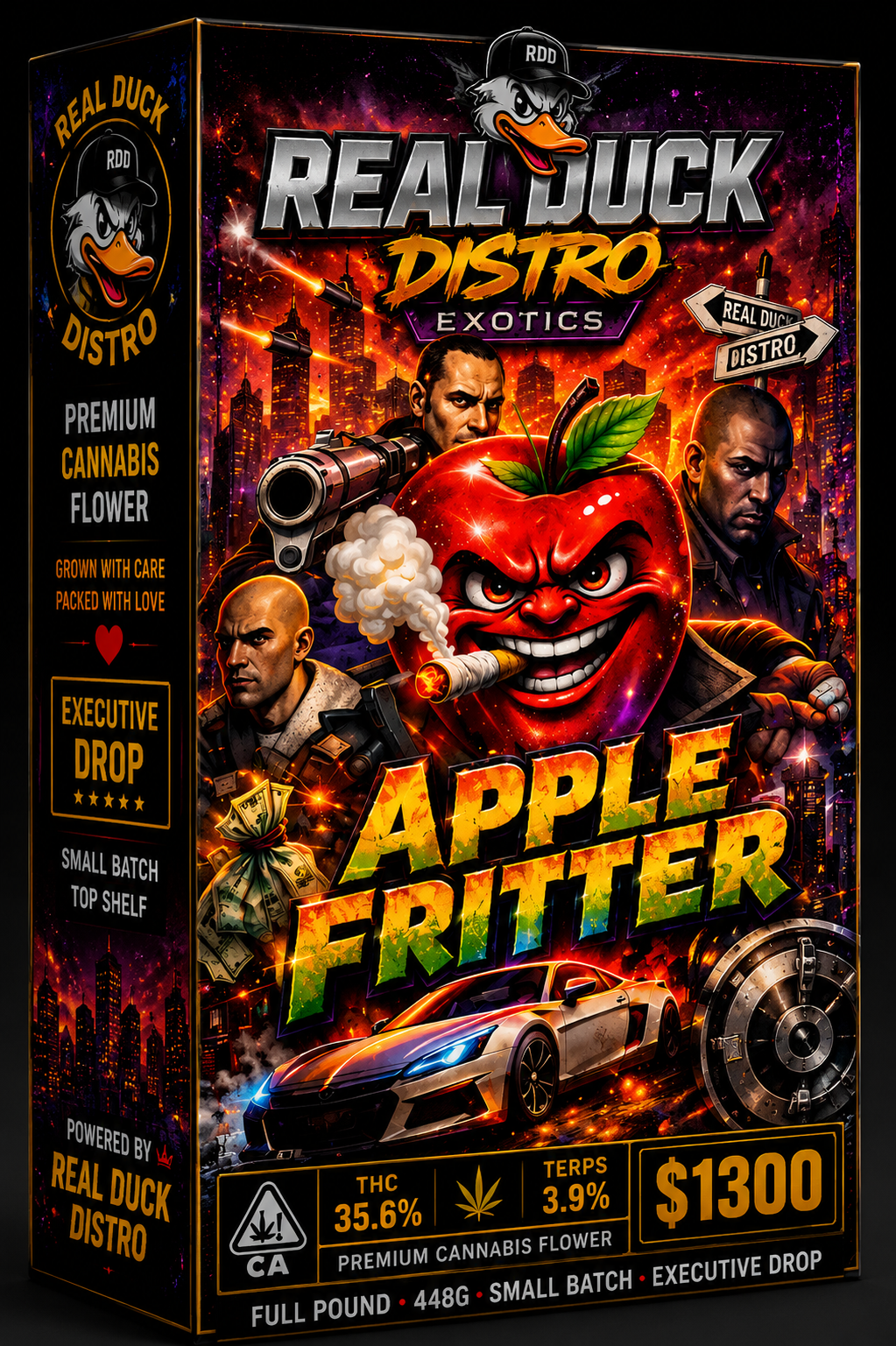
- Apple Fritter — 28-30% THCA pre-combustion, S-tier indica
- Sundae Driver — mid-to-upper 20s THCA, dessert-terps hybrid
- Pink Bubblegum — high-20s THCA, candy nose
- Wake & Bake — mid-20s THCA, sativa-leaning hybrid
These all have the THCA-to-THC conversion you'd expect from any "THCA flower" listing on a hemp brand's website.
Why some THCA flower vendors are actually selling junk
Here's the honest part. The legal loophole means lots of new "THCA flower" brands have popped up online. Some are legit. Many aren't. Watch for:
- 🚩 "THCA flower" with no lab tickets — if they can't show you a Certificate of Analysis (COA) for the specific batch, walk away
- 🚩 Suspiciously low prices — premium indoor cannabis costs $850+/lb wholesale regardless of THCA vs THC labeling. Bags at $80/oz are almost always trim or outdoor mislabeled as "indoor"
- 🚩 Glossy stock photos — real flower brands show their own product, not stock-photo nugs
- 🚩 No farm name, no genetics provenance — premium cultivators name their farms and breed lineage; flippers don't
The full counterfeit-detection framework we built for disposable vapes applies just as cleanly to flower. Different product, same scam patterns.
Practical buying guide: THCA flower vs. state-legal cannabis
| Buying from | Pros | Cons |
|---|---|---|
| Hemp-licensed THCA flower brand | Ships to more states; federal legal status; sometimes lower price | Variable quality; less mature regulation; some sketchy operators |
| State-licensed dispensary | Tightly regulated; lab-tested by state lab; predictable quality | Can only ship in-state; higher retail markup |
| Premium distro (us) | Top-tier genetics; verified cure; nationwide discreet shipping | We're a distro, not a brand — meet us at the genetics, not the marketing |
For most experienced smokers, the source matters more than the THCA-vs-THC labeling. Same chemistry; different supply chain.
The two things people get wrong about THCA flower
- "THCA doesn't get you high" — partially true. Raw, unheated THCA flower (chewed, juiced) won't produce psychoactive effects. But the second you smoke it, the THCA decarboxylates to THC and you're high. So as flower (the form it's sold in), it absolutely does get you high.
- "THCA flower is weaker than regular weed" — false. The cannabinoid content is identical. The labels report different molecular forms. The smoke is the same.
Read Next
- Indoor-Grown Cannabis: The Premium Tier Explained (2026) — what "indoor" actually means
- Strongest Weed Strains 2026 — THCA % Tier List — by potency
- What Are Terpenes? Complete 2026 Guide — the molecules behind flavor + effect
- Why Quality Cannabis Actually Matters — what cheap flower hides
- Is It Safe to Buy Weed Online? — vetting any flower vendor
Written by
Real Duck Distro Editorial Team
Cultivators, extract chemists, and cannabis writers based in Los Angeles, California — collectively 25+ years in the California cannabis industry. Every product we write about is one we've handled, tested, and stocked. Honest reviews, practical guides, real experience.
Specialties: California cultivation · Extract chemistry · Strain genetics · Disposable hardware · Harm reduction · Edibles dosing
Read Next
Keep going — we picked these for you
Live Resin vs Live Rosin (2026): The Real Difference & Which Is Worth Your Money
Live resin vs live rosin: one uses solvents, one uses only heat and pressure. The real difference in flavor, potency, purity and price for 2026.
Read article
Cannabis Terpenes Explained (2026): The 8 Aromas That Actually Shape Your High
Terpenes shape cannabis aroma, flavor and effect. Here's what myrcene, limonene, caryophyllene and 5 more do — and how to shop by terpene in 2026.
Read article
The 2026 July 4th Cannabis Guide: Strain Picks, BBQ Pairings & Discreet Family-Hang Tactics
July 4th rewards smart cannabis planning. The wrong strain at the wrong hour ruins the day. Here's the 2026 hour-by-hour guide — daytime picks, BBQ pairings, fireworks finishers, and how to keep it discreet when your aunt asks what you're smoking.
Read article